
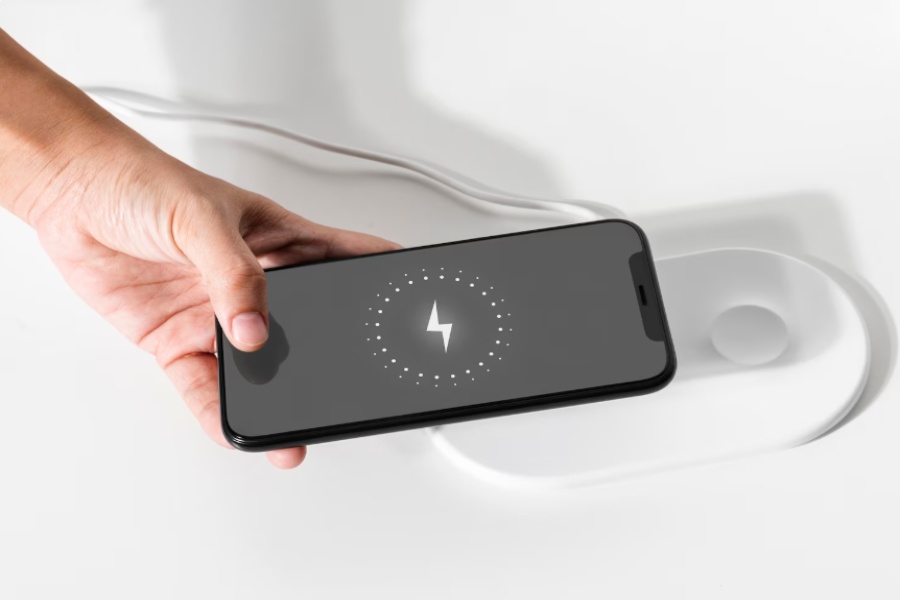
Wireless charging used to be convenient—but inconsistent. You’d drop your phone on a pad, walk away, and later discover it barely moved in battery percentage. Misalignment, heat, and “almost charging” moments made people distrust cable-free power.
That’s exactly where qi2 wireless charging alaikas enters the conversation: it represents a more modern, more predictable kind of wireless charging built around magnetic alignment. When the charger and phone lock into the correct position, energy transfers more efficiently, charging stays stable, and you spend less time re-centring your device.
Qi2 is driven by the Wireless Power Consortium (WPC) and improves the user experience with a magnetic attachment that aligns coils properly for better efficiency and easier usability. If you’ve ever liked the “snap” feel of MagSafe accessories, you’ll understand the idea—Qi2 uses a Magnetic Power Profile (MPP) inspired by MagSafe concepts, but aims for broader cross-brand compatibility.
Why Qi2 Magnetic Charging Feels Like a Real Upgrade
Qi2 improves consistency by using magnetic attachment to align the transmitter and receiver coils more precisely. That alignment supports better energy efficiency and a smoother daily experience—especially when you’re charging while notifications, calls, and vibrations keep nudging the phone around. The WPC highlights Qi2’s magnetic attachment as a key reason charging becomes easier and more efficient.
The “feel” matters too. A charger that snaps into place reduces friction in your routine. You stop hovering your phone over a pad to find the sweet spot. You stop waking up to a half-charged device. You stop repositioning your phone every time you bump the nightstand. That tiny convenience compounds into something bigger: confidence that wireless charging will work when you need it.
Compatibility also matters in the real world. People don’t own one device forever; they upgrade phones, switch cases, add car mounts, and keep chargers in multiple rooms. Qi2 aims to make magnetic wireless charging more consistent across brands and accessories, rather than locking the experience to a single ecosystem. The result is a setup that can grow with your devices instead of being replaced every time you change your phone.
Finally, reliability changes behaviour. When wireless charging becomes predictable, you use it more strategically: quick top-ups during work, a stable charge during video calls, or a “drop-and-go” habit when you walk in the door. You spend less time hunting cables and more time treating charging as ambient—something that happens quietly in the background.
What is Qi2, and how does it differ from Qi?
Qi2 is the next-generation wireless charging standard designed to make charging more consistent and easier. The biggest difference from classic Qi is built-in magnetic alignment, which helps deliver steadier speeds and better real-world reliability.
What Qi2 adds that classic Qi lacked
Qi2 introduces magnetic alignment as a built-in feature for a more repeatable charging experience, not just a nice extra. The WPC describes Qi2 as bringing faster 15W charging and a magnetic attachment that improves efficiency and usability.
Why “Magnetic Power Profile” is a big deal
The Magnetic Power Profile (MPP) is the headline feature: it’s based on MagSafe-style alignment, helping chargers and devices meet perfectly for stable power transfer.
What “fast” really means in practice
On certified Qi2 phones and chargers, “fast” typically refers to up to 15W under the right conditions (charger, phone, adapter, and case all cooperating).
Where Qi2 is going next
The WPC has also talked about Qi2 25W, positioning it as the next step up from Qi2’s convenience and efficiency—delivering more power with the same magnetic benefits.
How to Choose the Right Qi2 Charger for Daily Use
Choosing the right Qi2 charger is less about price and more about how you charge every day—desk, bedside, or travel. Use the checklist below to match the right form factor and power setup for reliable, effortless charging.
- How will you charge most often—desk, bed, or travel?
Desk users usually prefer a stand so the screen stays readable for calls, timers, and notifications. Bedside users often like a low-profile pad that’s easy to hit in the dark. Travel users should prioritise foldable designs and durable cables. - Check the full “power chain,” not just the pad
A Qi2 pad can only perform as well as the USB-C cable and wall adapter feeding it. If the adapter is weak, charging slows even if the pad looks premium. Choose a reputable adapter with enough overhead so the charger doesn’t starve for power during peaks. - Decide if you need a pad, a stand, or a multi-device station
A pad is the simplest and usually most portable. A stand improves visibility and reduces desk clutter. A 3-in-1 station is great if you regularly charge a phone plus earbuds, and a watch—just confirm the station’s layout fits your devices comfortably. - Prioritise safety features that reduce heat and throttling
Look for solid build quality, stable magnets, and good thermal design. Heat is often the silent reason wireless charging “feels slow.” Better alignment and better thermal performance usually mean fewer slowdowns and more consistent daily top-ups.
When should you upgrade to Qi2 wireless charging?
Upgrade timing depends on two things: your device and your frustration level. If you already rely on wireless charging but keep seeing inconsistent results—slow charging, heat spikes, or “did it even charge?” moments—Qi2 can feel like an instant quality-of-life boost because magnetic alignment reduces daily friction.
If you’re buying accessories anyway, that’s another strong upgrade moment. Many people purchase a new case, a new car mount, or a new bedside setup after a phone upgrade. Bundling a Qi2 charger into that refresh can be smarter than patching an older, misalignment-prone pad with workarounds.
You may also want to upgrade if you share chargers at home or work. Shared charging spaces often produce the worst alignment behaviour because different phones get placed differently, cases vary, and people bump the pad frequently. A magnetic snap-in design improves the odds that charging stays locked even when someone brushes the desk.
Finally, consider the next standard wave. The WPC has indicated Qi2 is evolving toward higher-power versions like Qi2 25W, aiming to deliver more charging power while keeping the magnetic convenience. If you want future-friendly accessories, stepping into the Qi2 ecosystem now can make later upgrades smoother.
How to fix slow wireless charging and common mistakes
Slow wireless charging is usually caused by power limitations, heat, or background drain—not the charger itself. Use the quick checks below to restore normal speed and keep charging consistent.
Watch Your Adapter, Cable, and Power Source
Slow wireless charging often starts with the power chain, not the charging pad. Even a premium charger can’t reach its best speed if the wall adapter is underpowered or the cable is low quality. Switch to a reliable USB-C Power Delivery (PD) adapter and a well-built USB-C cable, then test again. Also, avoid weak power sources like low-output ports on older laptops or bargain multi-plugs that can fluctuate under load.
Reduce Heat Triggers That Cause Throttling
Heat is one of the most common reasons wireless charging feels inconsistent. When a phone gets too warm, it can automatically reduce charging speed to protect the battery. Keep the charger on a hard, cool surface with airflow, and avoid charging on thick blankets, direct sunlight, or a hot car dashboard. Removing a thick case can also help reduce trapped heat during longer sessions.
Don’t Ignore Background Battery Drain
Sometimes the charger is working, but your phone is burning power as fast as it’s receiving it. Gaming, navigation, hotspot use, video calls, and high brightness can significantly increase battery drain, making charging appear slow. Close heavy apps, lower brightness, and let the phone rest for a few minutes to see the charging rate stabilise.
Conclusion
If wireless charging has ever felt unreliable, the fix usually isn’t “stop using it”—it’s to upgrade the alignment. Magnetic snap-on charging solves the most common frustration: phones sliding out of the sweet spot and losing speed. With better coil positioning, charging stays steadier, feels more predictable, and requires far less fuss in daily use.
As the standard evolves toward higher-power options like Qi2 25W, the core promise remains the same: simple, efficient, cable-free power that fits real life. Whether you’re topping up at your desk, charging overnight, or using a magnetic mount in the car, the goal is dependable charging that quietly works in the background.
FAQ’s
Is Qi2 faster than regular Qi?
In many setups, yes—Qi2 can deliver up to 15W on compatible devices, and magnetic alignment helps maintain that speed more consistently.
Does a phone case affect Qi2 charging?
Absolutely. Thick cases or misaligned magnetic rings can weaken the snap and reduce efficiency. A magnetic-friendly case usually improves results.
Why does my wireless charger get warm?
Some warmth is normal, but excess heat often comes from misalignment, poor adapters, or charging on heat-trapping surfaces. Improve airflow and alignment first.
Is Qi2 25W the same as Qi2?
It’s an evolution of Qi2 aimed at higher power while keeping the magnetic convenience. The WPC says Qi2 25W builds on Qi2’s magnetic attachment with nearly 70% more charging power.
When should I use wired charging instead?
Use wired charging when you need the fastest emergency boost—like before heading out, during a short break, or when your battery is critically low. Use wireless charging for daily “drop-and-go” habits that reduce cable clutter and keep your battery comfortably topped up throughout the day.